
CT Trauma: Read Chest and Abdominal Trauma with Confidence
No credit card required.
Trauma CT is one of the highest-stakes reads you will do on call.
You are not doing it electively. A patient is in the trauma bay. The surgical team wants answers in minutes. The question is never just 'is there injury' — it is 'where, how bad, and what does the team need to act on right now.'
The problem is that most trainees encounter trauma cases too irregularly to build real pattern recognition. You cannot learn this from a textbook. You need to see cases.
This course gives you 19 carefully selected trauma cases — split between chest and abdominal trauma. The case selection is intentional. We are not trying to show you every possible injury. We are trying to teach you the key principles you can apply broadly: how to grade solid organ lacerations, how to identify aortic injury, how to distinguish intraperitoneal from extraperitoneal bladder rupture.
Work through these 19 cases actively and you will be better prepared than most trainees who have done months of trauma rotations without this systematic exposure.
Who This Course Is For
R2-R4 radiology residents on trauma call or preparing for it. General surgery and emergency medicine trainees who want to understand what the CT is showing. Any trainee who has encountered trauma reads and wants a systematic framework.
Pathologies include:
Get a taste for some of the pathologies covered in this course.
Chest Trauma
- ●Including acute aortic injury, pneumothorax, and diaphragmatic injury
Abdominal Solid Organ Injuries
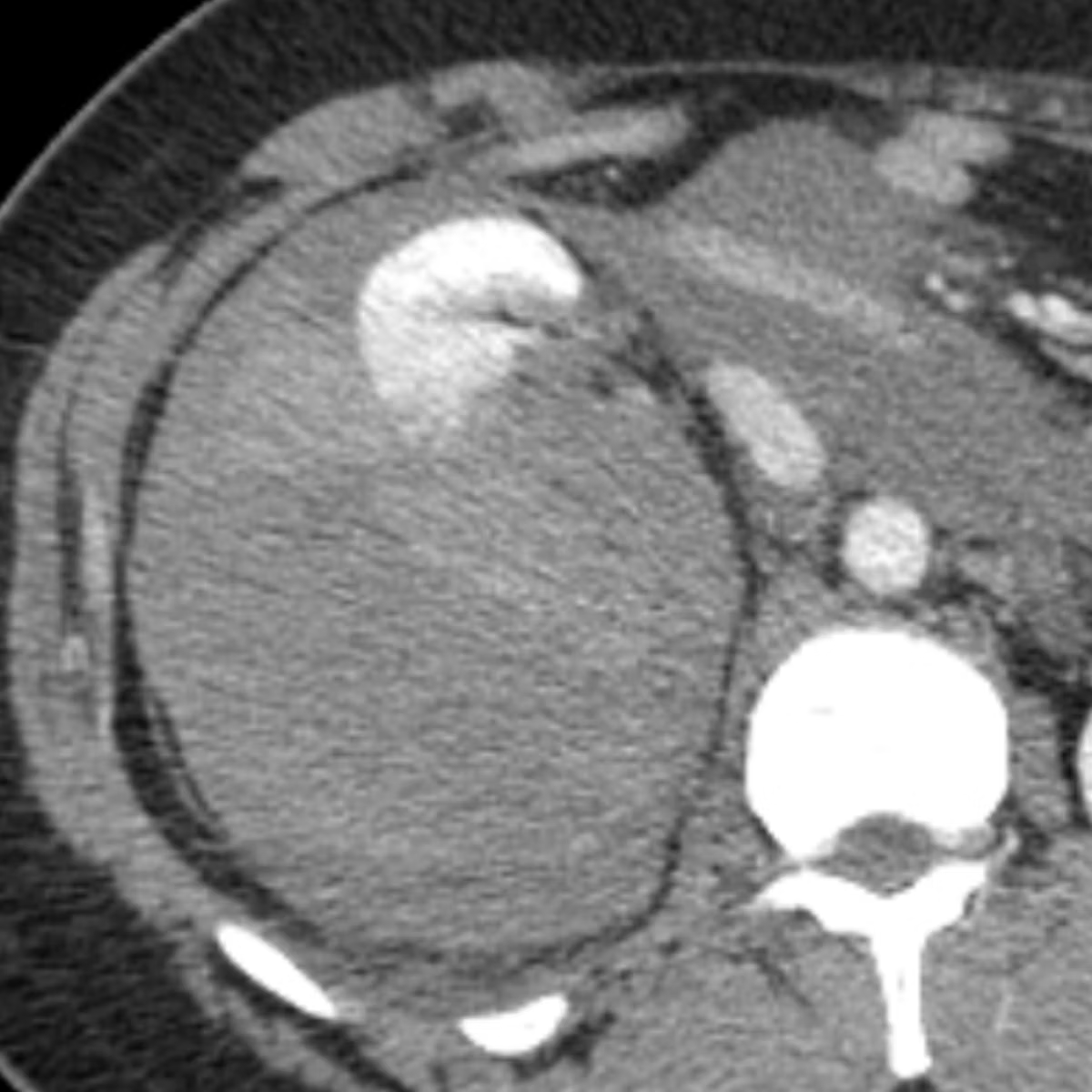
- ●Including liver, splenic, pancreatic, and renal lacerations
Hollow Viscus & Pelvic Trauma
- ●Including mesenteric injury, bladder rupture, and bowel injury
What You'll Learn
- 1Systematically evaluate a trauma CT using an organ-by-organ approach that does not miss secondary injuries.
- 2Grade and report solid organ lacerations using standardised criteria, with confidence about what to communicate to the surgical team.
- 3Distinguish acute aortic injury from normal variants, including the ductus bump.
- 4Differentiate intraperitoneal from extraperitoneal bladder rupture — a finding that directly changes surgical management.
""I was fumbling around trying to read body MRI. Having a body radiologist walk you through a case step by step — it's probably the nicest comparison you can make to a slow reading room day where an attending runs you through a great case.""
Frequently Asked Questions
Ready to start CT Trauma: Chest, Abdo?

In support of improving patient care, this activity has been planned and implemented by Navigating Radiology. Pinnacle Conference, LLC is jointly accredited by the Accreditation Council for Continuing Medical Education (ACCME), the Accreditation Council for Pharmacy Education (ACPE), and the American Nurses Credentialing Center (ANCC), to provide continuing education for the healthcare team.