
Learn to Read Chest X-Ray Like a Radiologist
No credit card required.
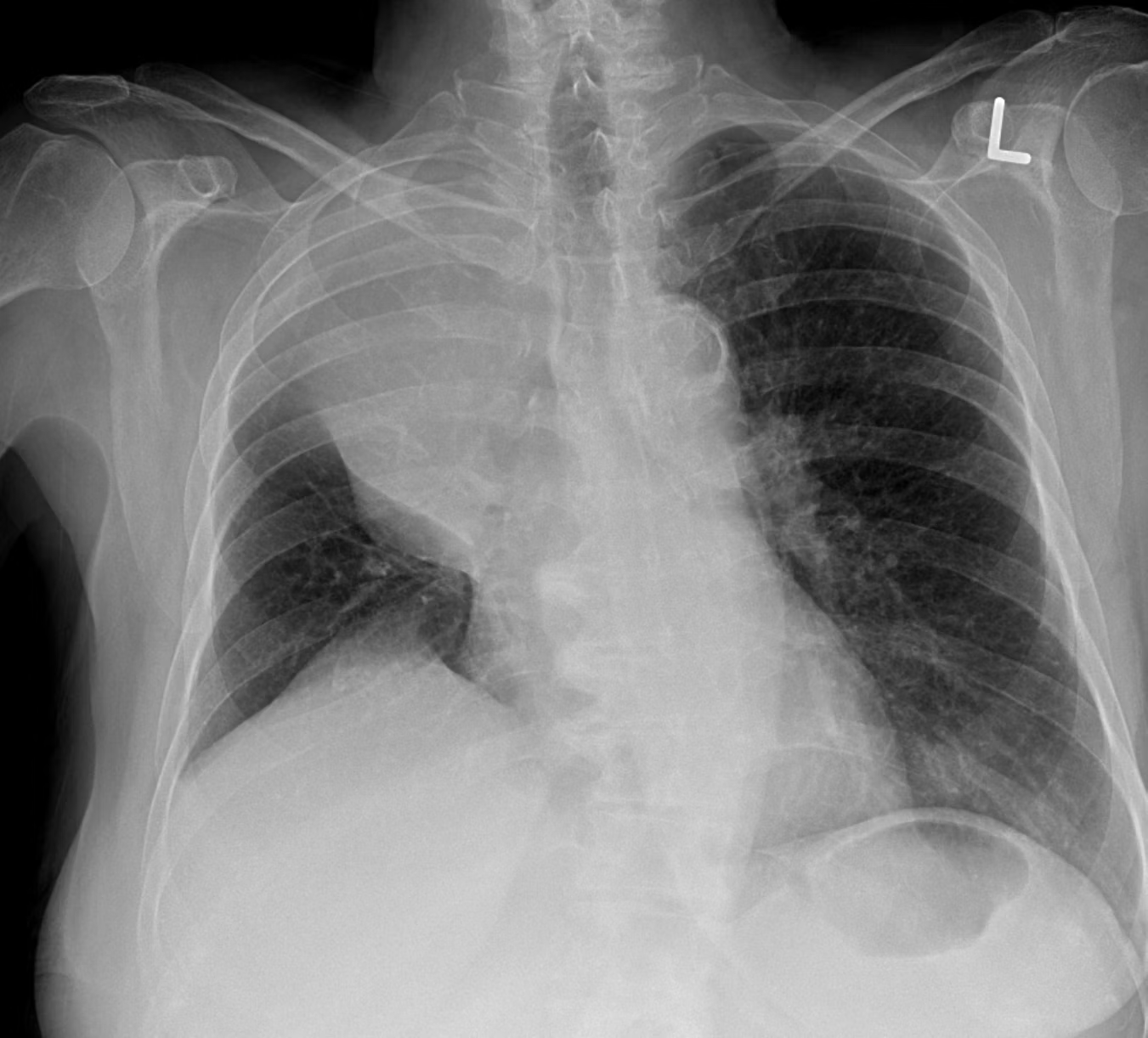
Chest X-rays are the most common study you will read. They are also the easiest to get wrong.
Most trainees try to learn by looking at as many films as they can. The problem is that without a system, you end up scanning the obvious and missing the subtle. A consolidation in the right base is hard to miss. A retrocardiac opacity is easy to. A small apical pneumothorax at 2 AM is very easy to.
This course teaches you a search pattern first. A real one — the same one a body radiologist uses every day. Then we apply it across 113 carefully selected real-world cases, chosen to expose you to the concepts and patterns that matter most.
Cases are presented in a single combined worklist. There are no subcategory labels to anchor on. That is intentional. It simulates real life: you do not know what is coming next. You have to look for yourself.
Who This Course Is For
R1-R3 radiology residents building call-ready skills. Medical students entering clinical rotations. NP/PA learners who report or triage plain films. Any trainee who wants a reliable system, not pattern guessing.
Pathologies include:
Get a taste for some of the pathologies covered in this course.
Lungs & Pleura
- ●Including lobar pneumonia, collapse, pneumothorax, and pleural effusions
Diffuse & Nodular Disease
- ●Including pulmonary oedema, TB, sarcoidosis, and metastatic disease
Tubes, Lines & Devices
- ●Including malpositioned ETTs, pacemakers, and critical care device assessment
What You'll Learn
- 1Apply a reliable search pattern across frontal and lateral chest radiographs so nothing is missed — including the apices, hila, and retrocardiac region.
- 2Recognise the major patterns of lung disease: consolidation, collapse, interstitial change, and pleural abnormality.
- 3Evaluate tubes, lines, and support devices and identify malpositions that require immediate communication.
- 4Build the speed and consistency to work through a plain film worklist efficiently on call.
""Five hours of reading gave me less than 30 minutes on this platform.""
Frequently Asked Questions
Ready to start Chest X-Ray?
In support of improving patient care, this activity has been planned and implemented by Navigating Radiology. Pinnacle Conference, LLC is jointly accredited by the Accreditation Council for Continuing Medical Education (ACCME), the Accreditation Council for Pharmacy Education (ACPE), and the American Nurses Credentialing Center (ANCC), to provide continuing education for the healthcare team.