
Abdominal Ultrasound: Build Pattern Recognition for Emergency Cases
No credit card required.
Ultrasound is one of the hardest modalities to learn from a book.
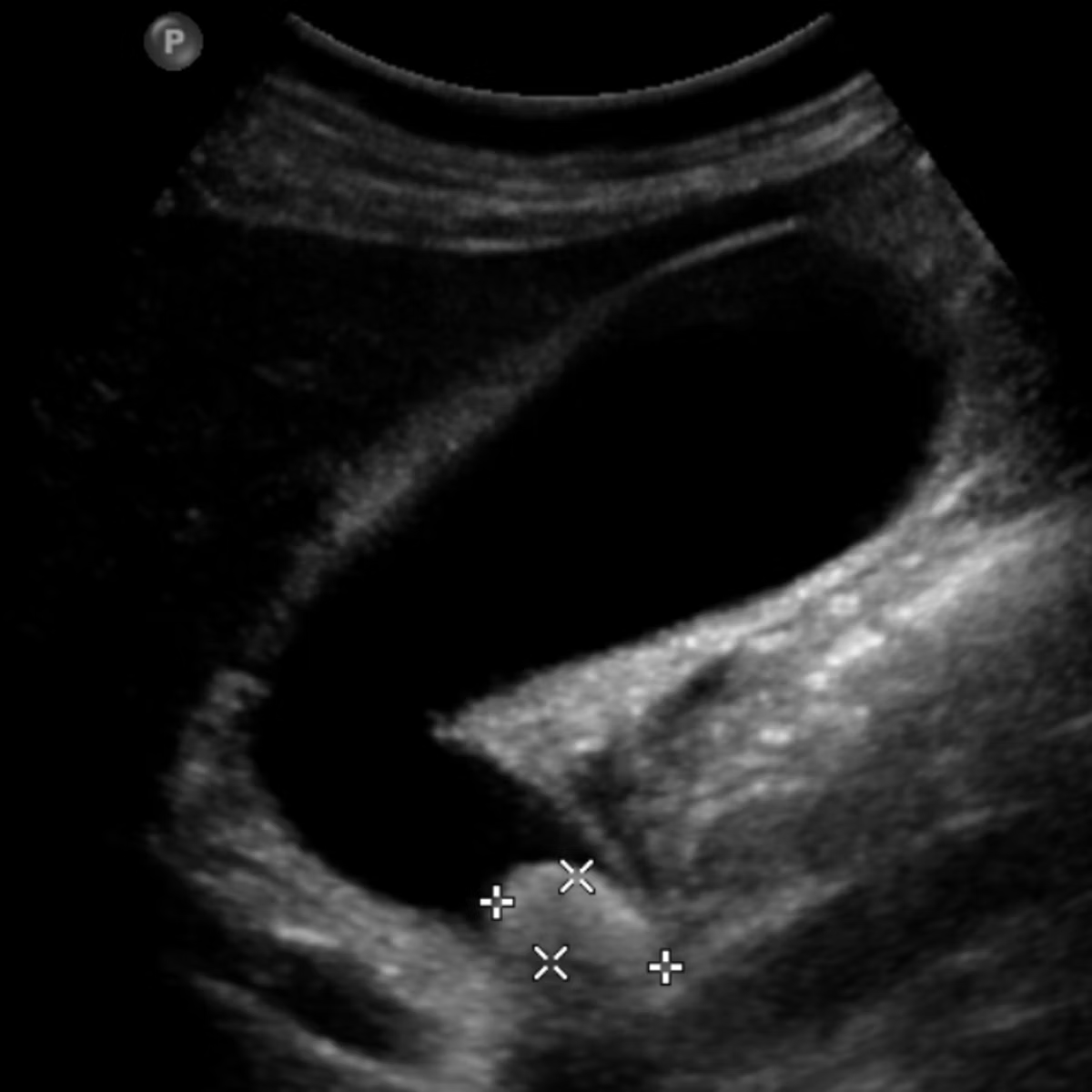
You cannot understand what cholecystitis looks like until you have scrolled through enough real cases to recognise the wall thickening, the stones, the shadowing, the pericholecystic fluid. You cannot learn Doppler waveforms from a diagram.
This course starts at the beginning. The introductory videos cover Doppler principles — spectral waveforms, the resistive index, how to read the waveform from head to toe — in plain language before you see a single case. Doppler is one of the most commonly avoided topics in residency because it seems complex. It is not, once you understand the underlying principle.
Then 27 curated emergency cases walk you through the essential pathology: acute abdominal pain, pelvic emergencies including ectopic pregnancy and ovarian torsion, scrotal emergencies, and post-transplant Doppler assessment.
Who This Course Is For
R1-R3 radiology residents building ultrasound confidence. Any resident who reads emergency ultrasound on call and wants a reliable framework for Doppler and pelvic cases.
Pathologies include:
Get a taste for some of the pathologies covered in this course.
Acute Abdominal Pathologies
- ●Including acute cholecystitis, choledocholithiasis, pancreatitis, and appendicitis
Acute Gynaecological & Scrotal Emergencies
- ●Including ovarian torsion, ectopic pregnancy, testicular torsion, and epididymo-orchitis
Post-Transplant Doppler
- ●Including renal artery stenosis, renal vein thrombosis, and hepatic artery thrombosis
What You'll Learn
- 1Apply a systematic approach to acute abdominal and pelvic ultrasound that covers the most important time-critical diagnoses.
- 2Interpret spectral Doppler waveforms confidently — understand what normal looks like before recognising the abnormal.
- 3Diagnose acute pelvic emergencies on ultrasound: distinguish torsion from haemorrhagic cyst, identify ectopic pregnancy, assess for retained products.
- 4Assess post-transplant kidneys and livers using Doppler — recognise stenosis, thrombosis, and normal variants.
""I was going through a difficult MSK fellowship prep period. Then I found NavRad and went boom.""
Frequently Asked Questions
Ready to start Abdo Ultrasound?
In support of improving patient care, this activity has been planned and implemented by Navigating Radiology. Pinnacle Conference, LLC is jointly accredited by the Accreditation Council for Continuing Medical Education (ACCME), the Accreditation Council for Pharmacy Education (ACPE), and the American Nurses Credentialing Center (ANCC), to provide continuing education for the healthcare team.